A Comprehensive Overview to Aluminum Casting: Strategies, Makes Use Of, and Industry Insights
Aluminum casting is a vital process with diverse applications across several markets. This guide takes a look at numerous casting techniques, including sand, pass away, and financial investment casting. Each method has distinct benefits, contributing to aluminum's online reputation for corrosion-resistant and lightweight components. Comprehending these methods is important for manufacturers seeking to leverage aluminum's buildings. However, the landscape is rapidly developing. The impact of existing fads on future methods warrants even more expedition.
Understanding Aluminum: Residences and Advantages
Aluminum, a flexible steel, is extensively identified for its special homes that make it a suitable option for different applications. It is light-weight yet solid, offering a superb strength-to-weight proportion that is particularly helpful in sectors such as aerospace and automobile. Additionally, aluminum shows phenomenal corrosion resistance due to the development of a safety oxide layer, which enhances its durability and longevity.
The metal is additionally highly flexible, allowing for easy shaping and manufacture, which adds to its prevalent use in manufacturing. Aluminum is a superb conductor of electrical power and warmth, making it beneficial in electrical and thermal applications. Its recyclability includes to its appeal, advertising sustainability in producing procedures. The combination of these homes not just improves performance but likewise lowers power consumption throughout its lifecycle, placing aluminum as an essential material in modern engineering and layout.
Summary of Aluminum Casting Techniques
Sand Casting Techniques
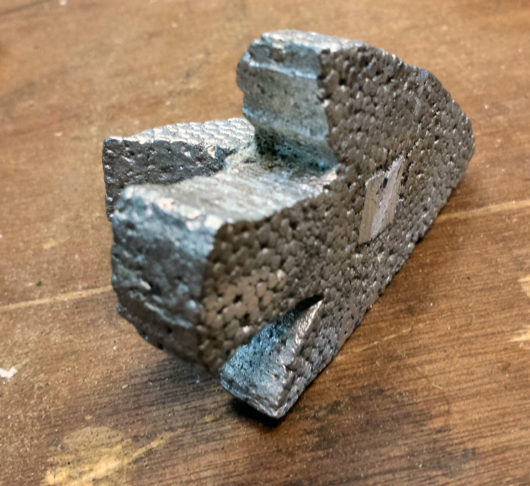
Among different aluminum casting methods, sand casting attracts attention as one of one of the most extensively made use of approaches due to its adaptability and cost-effectiveness. This method includes creating a mold from sand, which can be easily shaped to create intricate geometries. The procedure begins with packing sand around a pattern, commonly made of metal or plastic, to produce a tooth cavity that specifies the final form. As soon as the mold is ready, molten aluminum is poured into the dental caries, permitting it to solidify and cool. Later, the sand is eliminated, revealing the cast part. Sand casting is particularly favored for producing big parts and tiny manufacturing runs, making it an essential method in numerous markets, including auto and aerospace. Its versatility to various designs improves its charm.
Die Casting Processes
Die casting processes represent a highly reliable method for generating intricate aluminum get rid of superb dimensional accuracy and surface area finish. This strategy includes forcing molten aluminum into a mold and mildew under high pressure, guaranteeing that even the most intricate geometries can be accomplished. There are 2 key sorts of die casting: hot chamber and cold chamber. Warm chamber pass away casting is suitable for steels with reduced melting points, while cool chamber pass away casting is chosen for aluminum as a result of its greater melting point. Both approaches help with rapid production and can accommodate high quantities, making them optimal for industries such as automotive and electronics. Effective die casting calls for exact temperature control and mindful mold and mildew layout to ensure and protect against flaws top quality.
Sand Casting: A Typical Technique
Although modern-day casting methods have actually emerged, sand casting continues to be a foundational approach in the aluminum market because of its convenience and cost-effectiveness. This traditional technique involves creating a mold from a mixture of sand and a binding agent, enabling the production of complicated sizes and shapes. Sand casting is especially helpful for low to medium production quantities, as it lessens configuration costs and time.
The process starts with the production of a pattern, which is then positioned in the sand to develop a cavity. Once the mold and mildew is ready, liquified aluminum is gathered, loading the dental caries and taking the form of the pattern. After cooling, the sand is removed, disclosing the ended up actors component.
Sand casting is widely used for creating automotive elements, machinery components, and artistic sculptures, highlighting its enduring significance in different industries of the aluminum industry. (Precision aluminum casting)
Die Casting: Precision and Effectiveness
Die casting is a process that offers remarkable precision and efficiency in aluminum manufacturing. This approach is commonly made use of across numerous sectors as a result of its ability to generate complicated forms with limited tolerances. It likewise offers distinct challenges that need ingenious solutions to ensure ideal outcomes.
Process Summary and Conveniences
When taking into consideration aluminum casting approaches, pass away casting stands apart for its precision and performance. This process includes forcing molten aluminum right into a mold and mildew under high pressure, which enables limited tolerances and intricate styles. The rapid cooling of the metal warranties quick solidification, leading to high-quality components with minimal surface area flaws. In enhancement, die casting offers excellent repeatability, making it suitable for big manufacturing runs. Making use of recyclable mold and mildews significantly minimizes product waste and production time, adding to cost-effectiveness. The stamina and longevity of die-cast aluminum parts make them favorable for demanding applications. Overall, pass away casting combines advanced technology with useful advantages, placing it as a leading choice in aluminum casting strategies.
Applications in Different Industries
The convenience of die casting enables its application across a vast array of industries, showcasing its he has a good point precision and performance. In the vehicle market, die casting creates complex parts such as engine blocks and transmission real estates, adding to weight reduction and improved efficiency. The electronics sector gain from die casting by producing lightweight and durable real estates for numerous tools, boosting both capability and aesthetic appeals. In the aerospace field, this strategy supplies high-strength components that stand up to extreme problems while preserving low weight. Additionally, durable goods suppliers use die casting for producing components that call for tight resistances and complex geometries. On the whole, die casting plays a crucial duty in advancing modern technology and product layout throughout numerous industries, highlighting its relevance in modern production.
Challenges and Solutions
Numerous challenges occur in the die casting process that can influence both precision and performance. One significant issue is the incident of problems such as porosity, which can endanger the stability of the final item. Additionally, preserving accurate temperature control is crucial, as variants can lead to irregular product residential or commercial properties. Device deterioration likewise existing challenges, frequently resulting in enhanced production prices and downtime. To minimize these concerns, manufacturers make use of innovative simulation software to forecast possible troubles before production starts. Executing regular upkeep timetables for machinery and tools also assists maintain performance. Spending in high-quality materials and employing skilled technicians can boost general process reliability, making certain that high requirements of accuracy are consistently satisfied.
Investment Casting: Information and Complexity
Although financial investment casting is commonly connected with high accuracy and complex layouts, its true toughness depends on the ability to produce complex geometries that would certainly be testing to achieve through various other making processes. This method uses a wax pattern, which is covered with a refractory product to develop a mold and mildew. Once the mold is developed, the wax is thawed away, leaving a cavity that completely replicates Aluminum Casting Company the original pattern.

Applications of Aluminum Castings Across Industries
Investment casting's capacity for producing elaborate aluminum components has actually made it a beneficial method across different sectors. In the auto sector, aluminum spreadings are utilized for engine blocks, transmission housings, and suspension parts, contributing to weight reduction and enhanced gas effectiveness. The aerospace market take advantage of aluminum castings in airplane frameworks, turbine housings, and touchdown equipment, where strength-to-weight proportion is important. aluminum casting. Furthermore, the electronic devices industry employs aluminum castings for heat enclosures and sinks, making certain reliable thermal monitoring and durability. In the building and construction industry, aluminum castings are utilized for architectural aspects, home window frameworks, and structural components, providing deterioration resistance and aesthetic charm. The marine sector integrates aluminum spreadings in boat engines and fittings due to their lightweight and resistance to salt water rust. Generally, aluminum castings show adaptability and performance, making them indispensable in varied applications across countless fields
Existing Trends and Future Instructions in Aluminum Casting
Recent innovations in aluminum casting modern technology are shaping the future of producing throughout various industries. One noteworthy pattern is the enhancing adoption of additive production strategies, which permit for even more facility geometries and lowered material waste. Furthermore, the combination of automation and robotics enhances production procedures, boosting efficiency and accuracy.
Sustainability is likewise a driving pressure, with suppliers concentrating on reusing aluminum and minimizing power intake throughout the casting process. This change not just decreases environmental impact yet additionally decreases operational costs.
Improvements in simulation software application allow better style and optimization of casting processes, resulting in higher high quality products with fewer defects. As sectors continue to accept these technologies, the demand for high-performance and light-weight aluminum elements is anticipated to climb, additionally strengthening aluminum casting's function in the future of manufacturing. In general, these trends highlight a commitment to effectiveness, sustainability, and technical improvement in the aluminum casting market.
Regularly Asked Questions
What Are the Ecological Impacts of Aluminum Casting Processes?
Exactly How Does Aluminum Casting Contrast to Various Other Materials?
Aluminum casting offers lightweight, corrosion-resistant buildings, making it useful contrasted to much heavier metals like steel. Its thermal conductivity and simplicity of forming even more enhance its charm, while certain plastics offer versatility lacking in typical aluminum applications.
What Precaution Should Be Taken During Aluminum Casting?
During aluminum casting, vital precaution include putting on safety equipment, making certain appropriate air flow, using fireproof products, keeping devices on a regular basis, and sticking to safety and security procedures to avoid accidents and exposure to unsafe fumes and molten steel.
How Can I Choose the Right Aluminum Alloy for Casting?
Choosing the appropriate aluminum alloy for casting includes examining mechanical residential properties, rust resistance, and designated application. Think about variables like temperature level resistance and weldability to guarantee the selected alloy fulfills certain performance and durability needs.
What Are the Typical Defects in Aluminum Castings and Their Solutions?
Usual problems in aluminum castings consist of porosity, surface, and shrinkage imperfections. Solutions involve boosting mold layout, regulating cooling rates, and ensuring proper alloy selection, along with applying comprehensive assessment strategies to identify and fix these concerns successfully.
Among the most commonly used methods are sand casting and die casting, each offering distinct advantages and applications. Among various aluminum casting strategies, sand casting stands out as one of the most extensively made use of techniques due to its versatility and cost-effectiveness. Warm chamber die casting is ideal for metals with low melting factors, while cool chamber die casting is favored for aluminum due to its greater melting factor. Contemporary casting methods have actually arised, sand casting remains a foundational important link technique in the aluminum industry due to its flexibility and cost-effectiveness. When taking into consideration aluminum casting techniques, pass away casting stands out for its precision and performance.